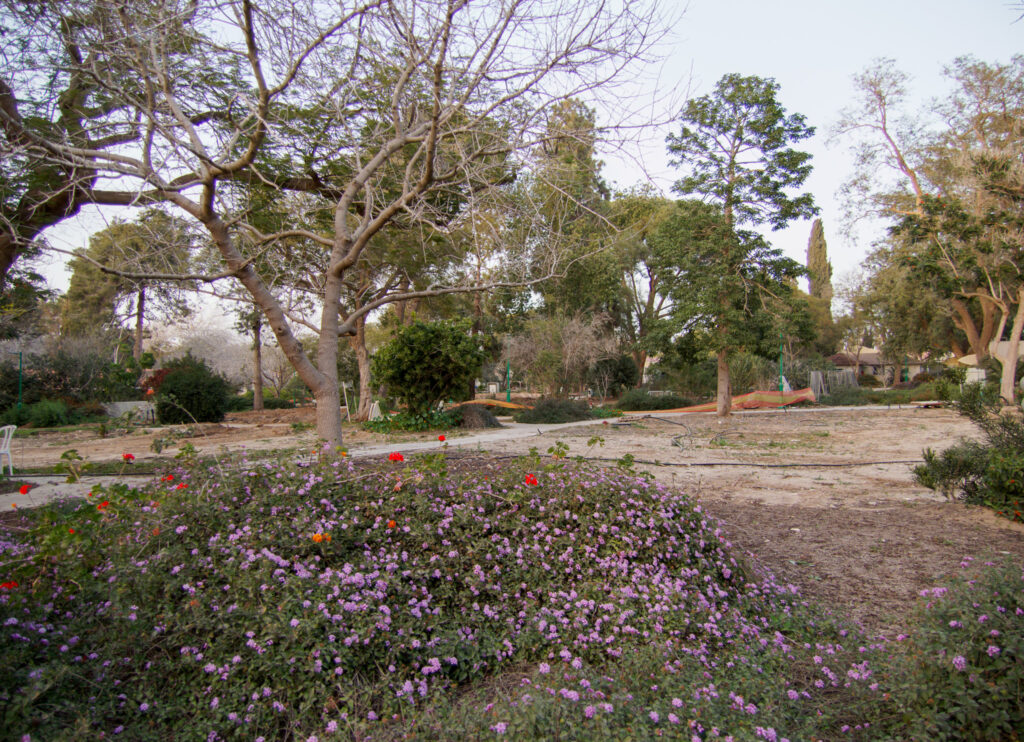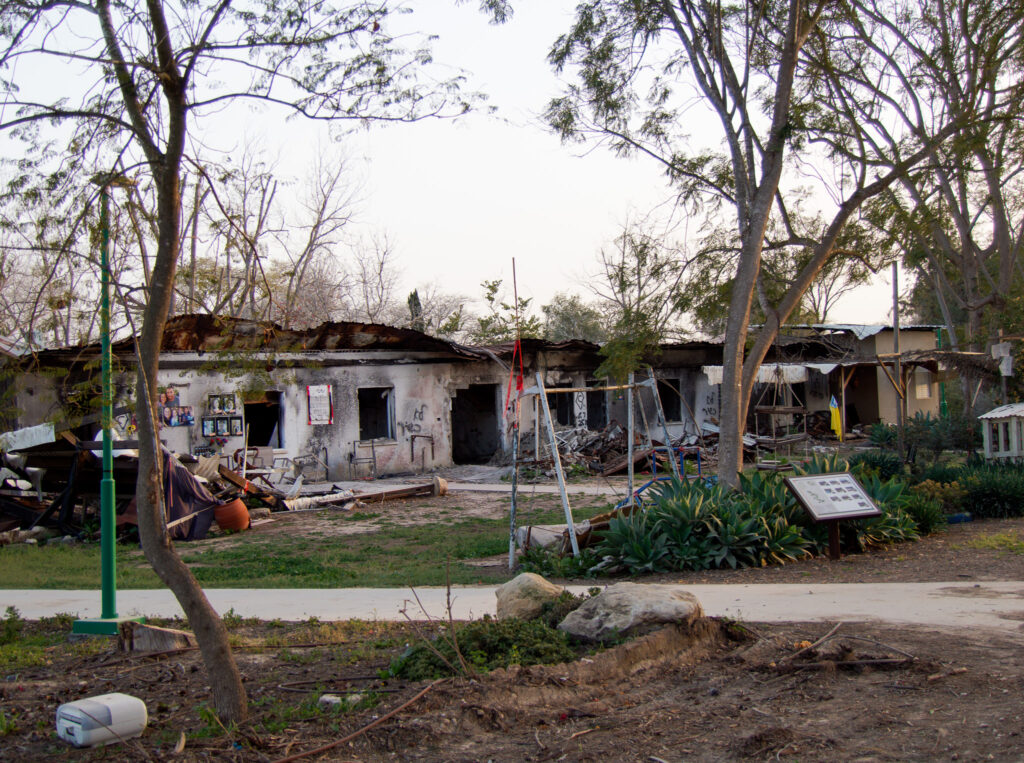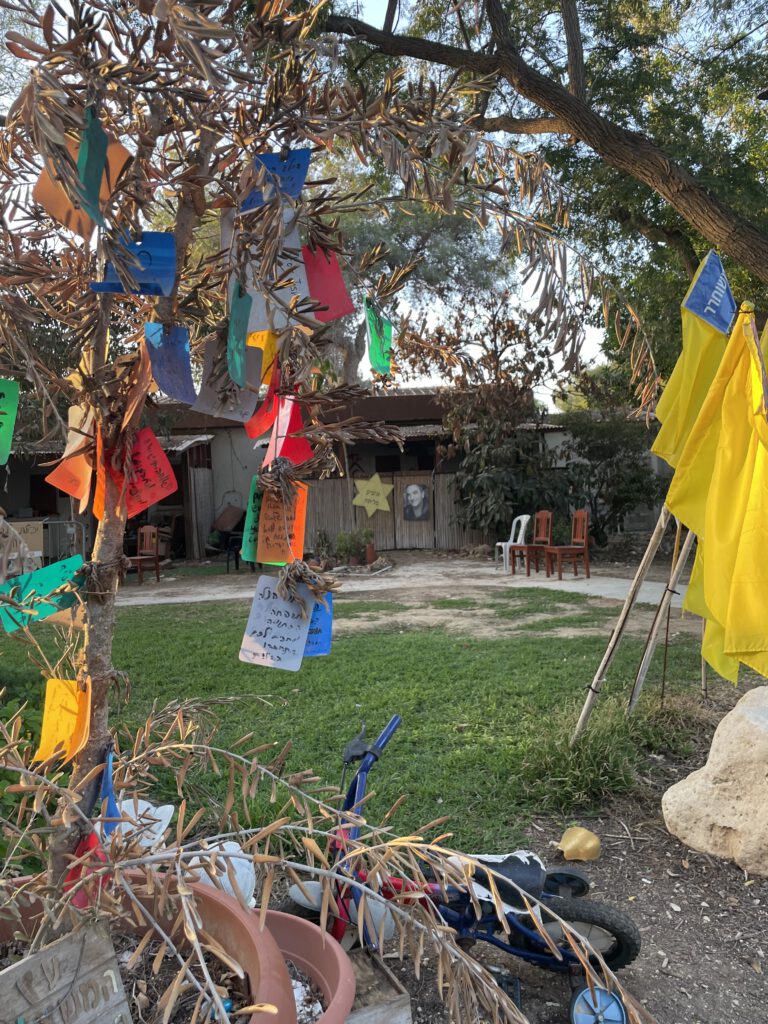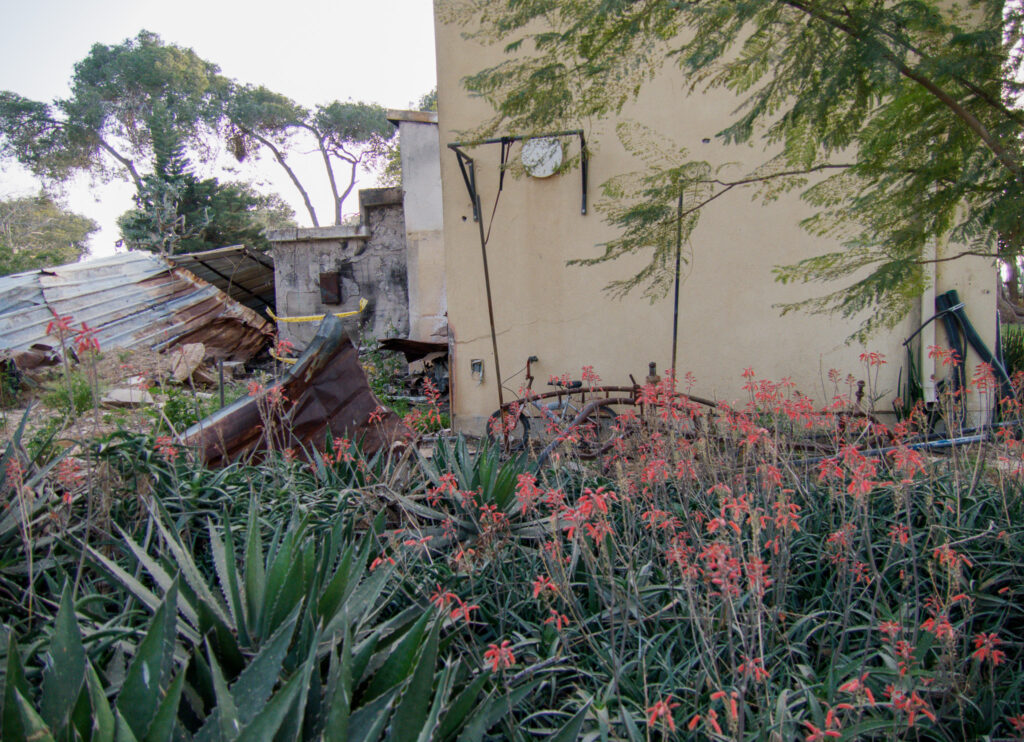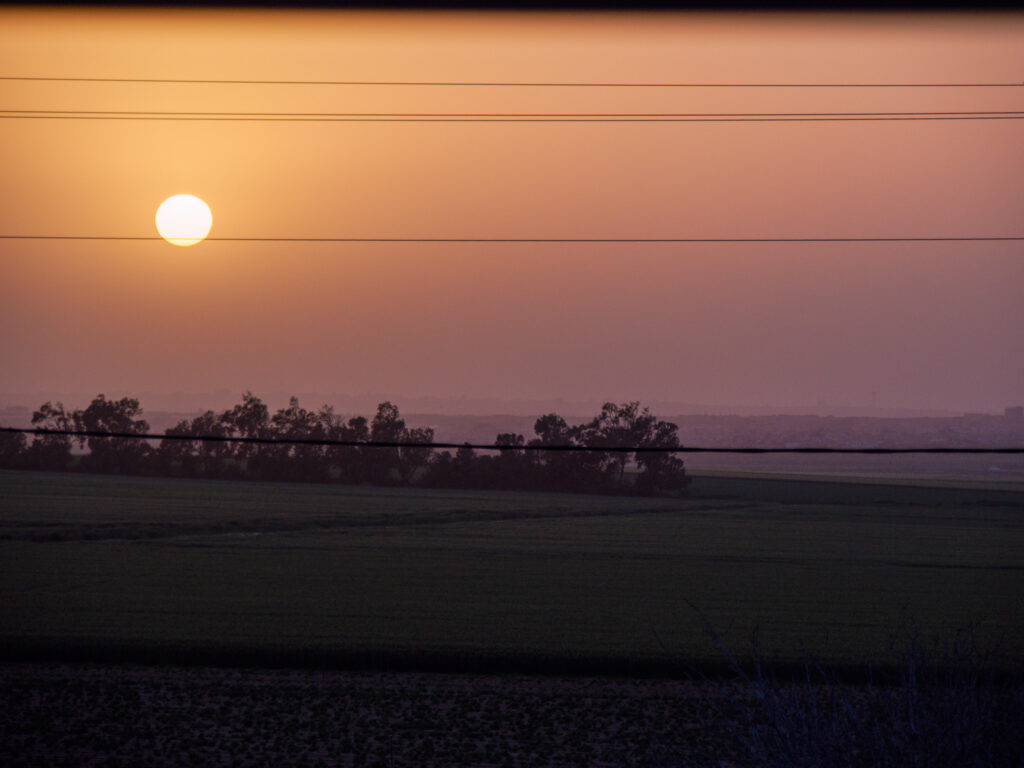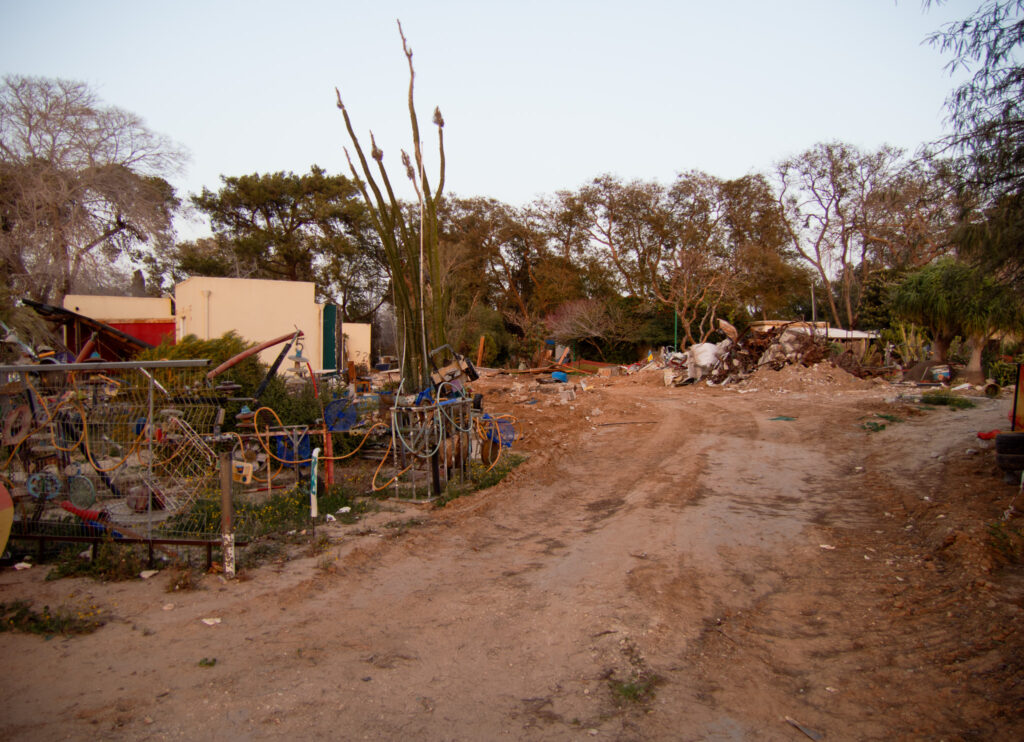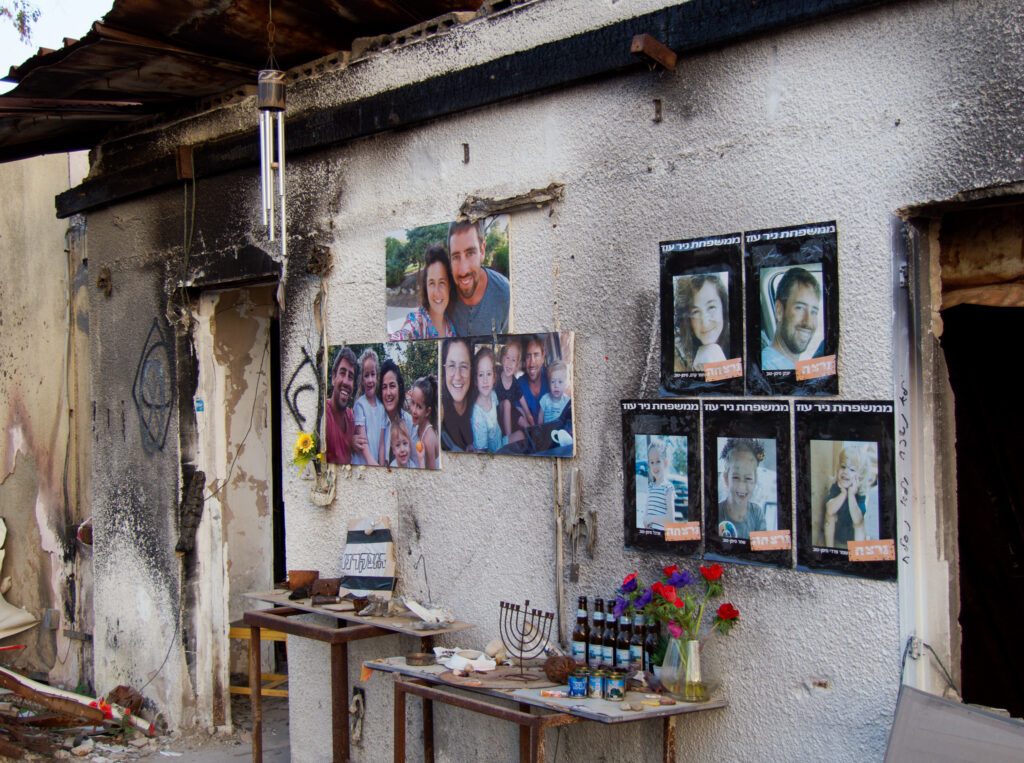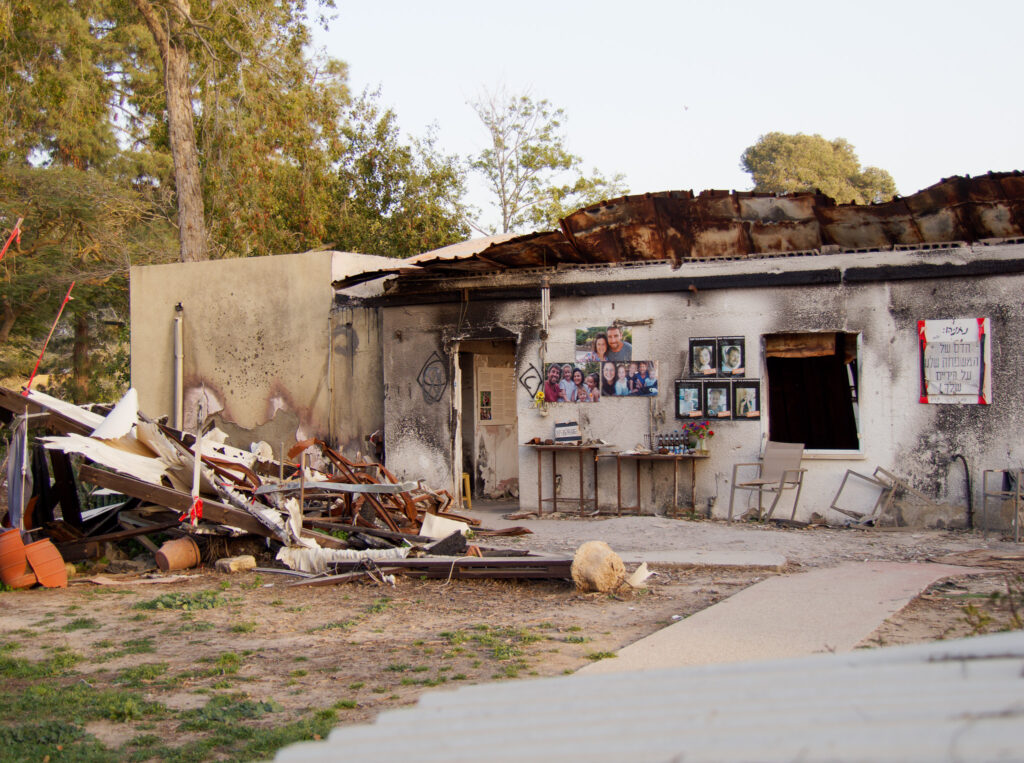
Perhaps it is precisely this beauty that unsettles the gaze today. For in Nir Oz, the violence does not stand in contrast to the idyll; it has inscribed itself into it. On October 7, 2023, 47 people were murdered there and 76 abducted. Nearly every house was damaged, looted, or set on fire; only a few residential buildings remained unscathed. Nir Oz thus became one of the hardest-hit places of that day—the largest massacre of Jews since the Second World War.
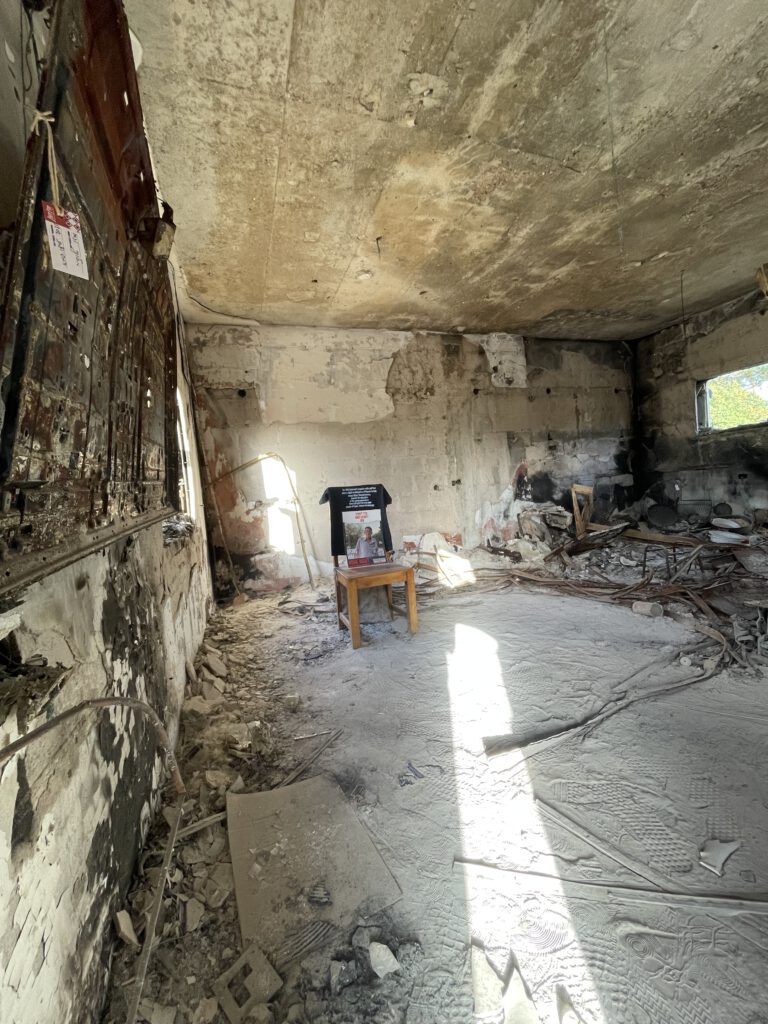
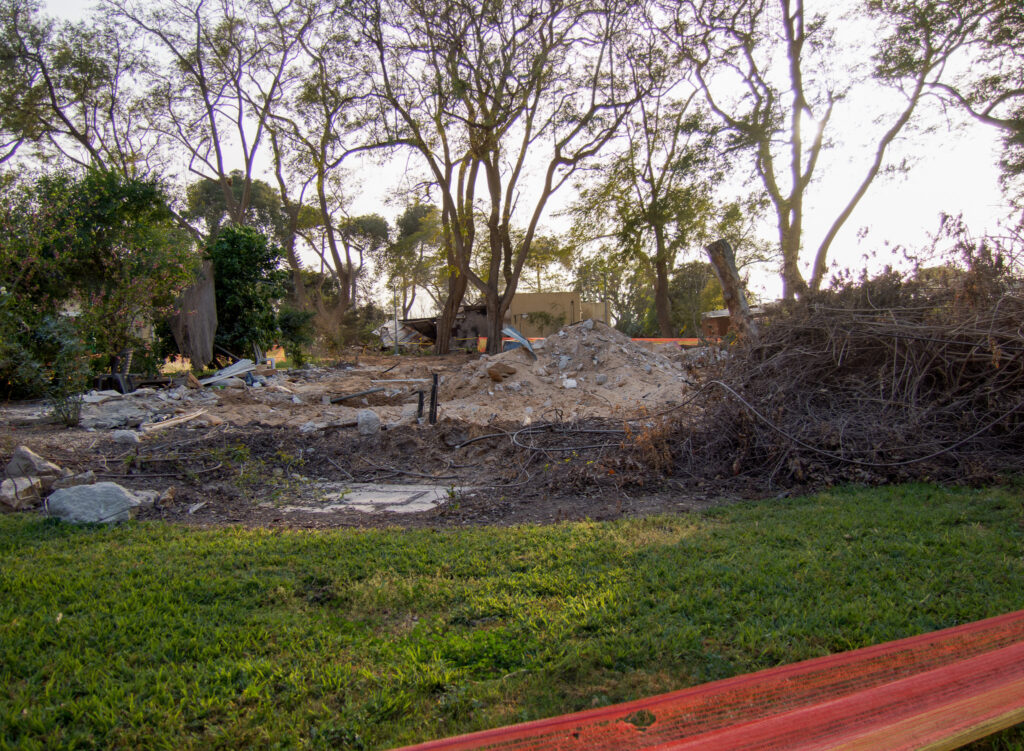
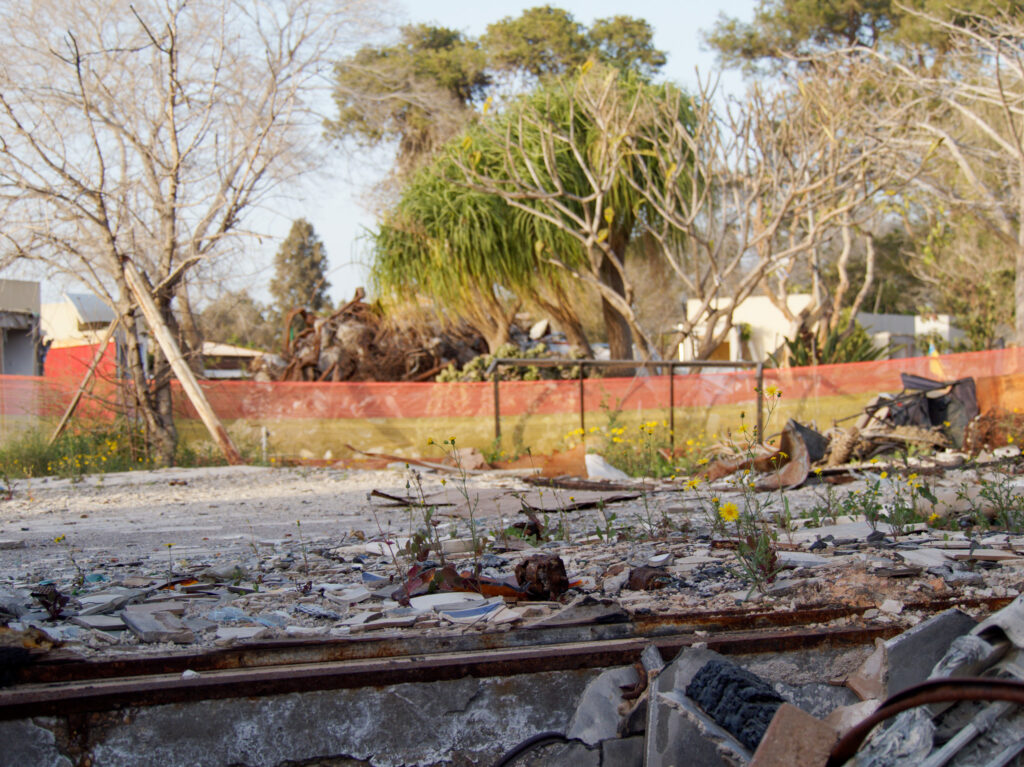
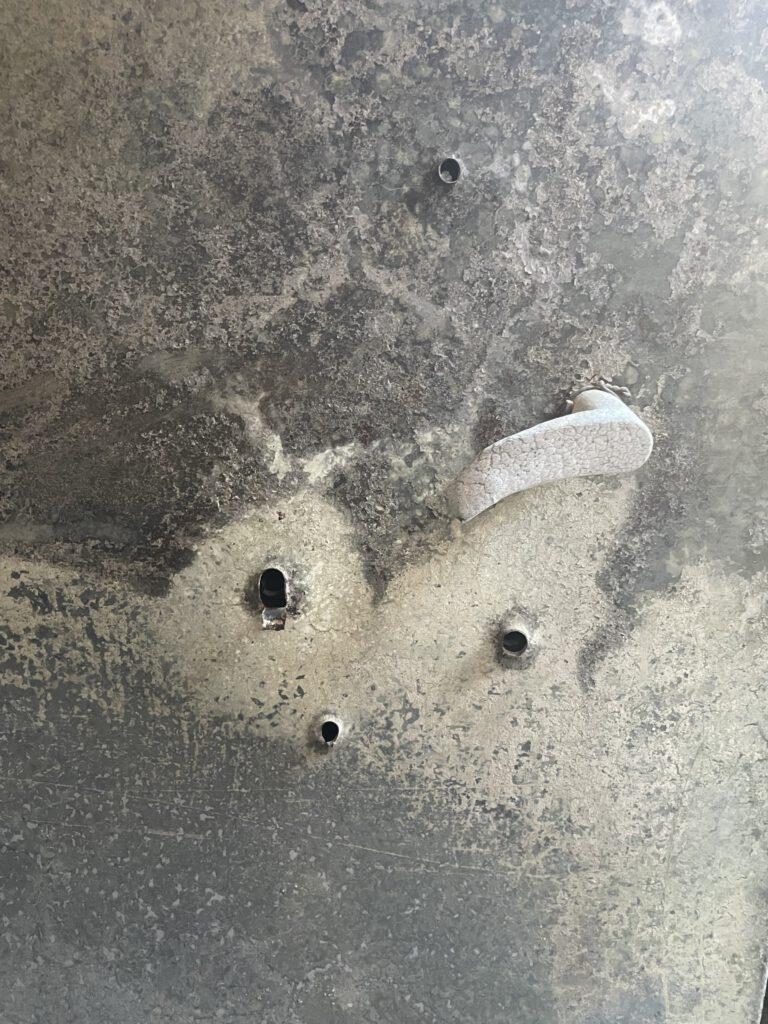
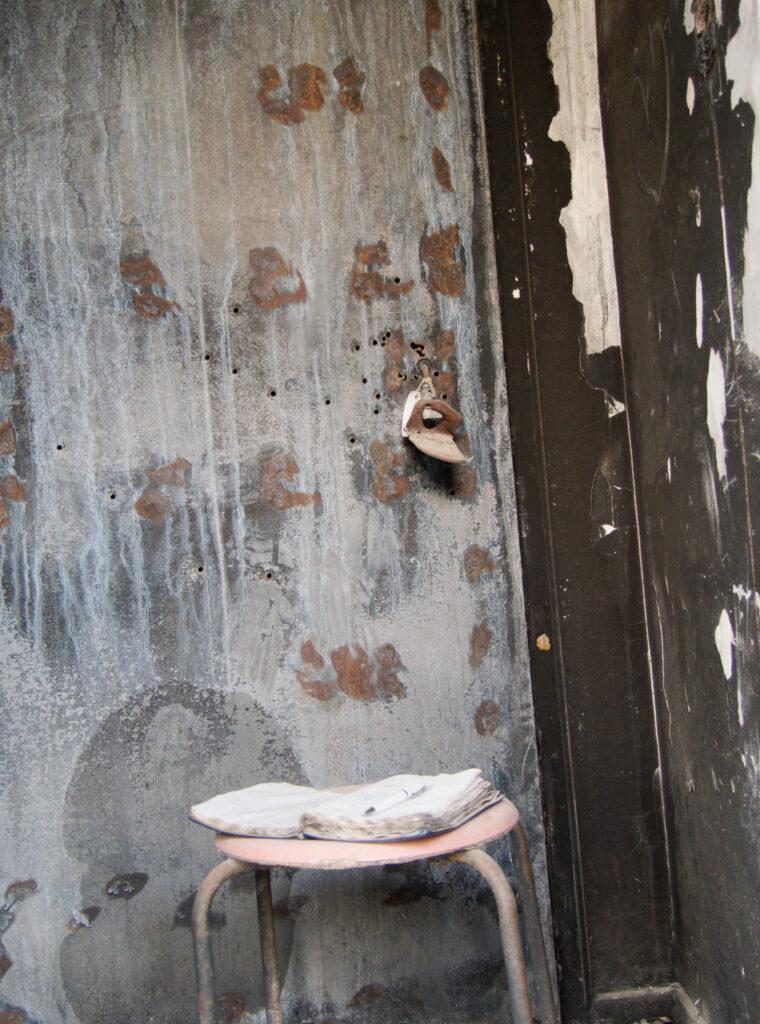
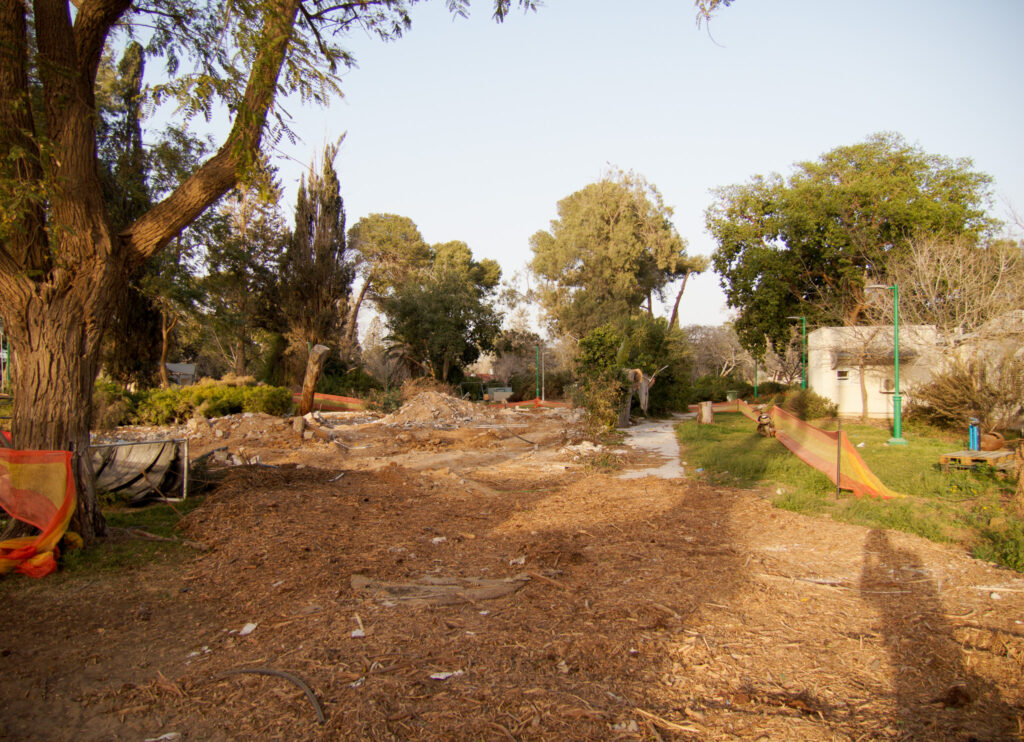
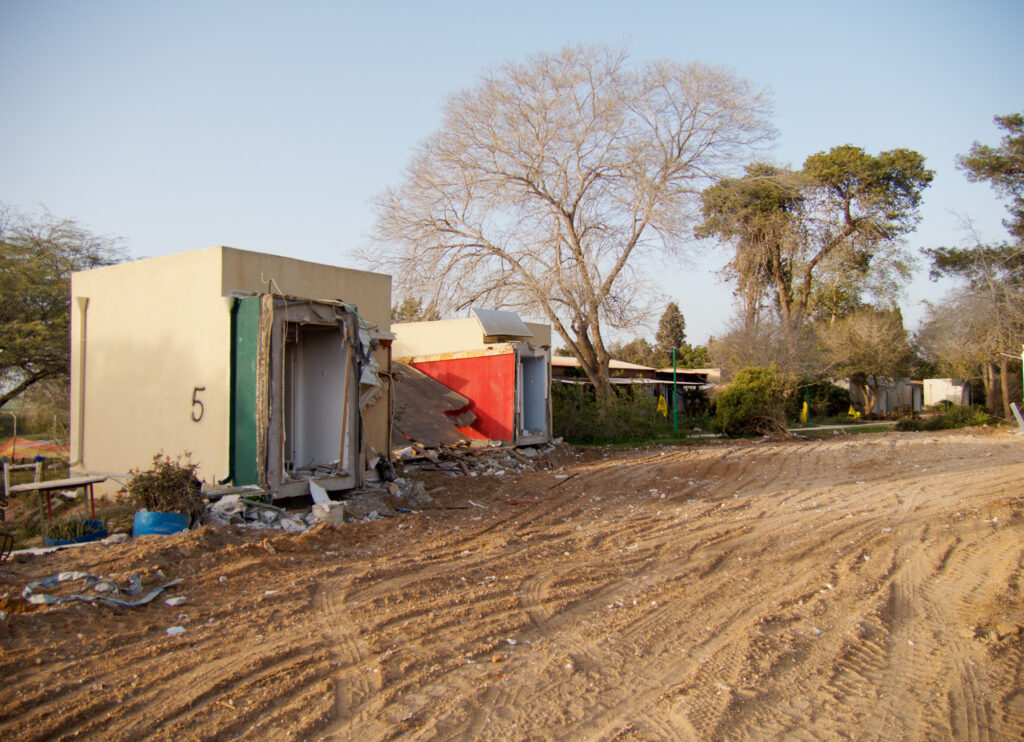
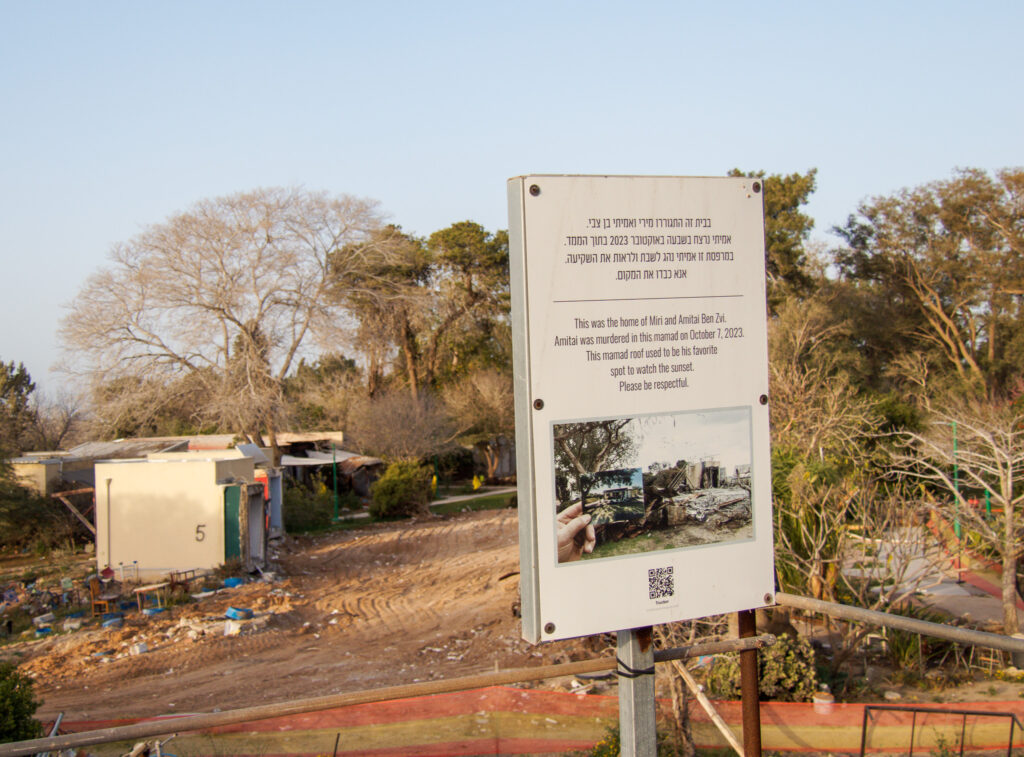
Anyone walking through the kibbutz today still sees the wounds of that day. They are visible in destroyed and burned houses, in facades, in windows and doors marked by bullet holes. But they are also visible where nothing stands anymore, because demolition precedes reconstruction. Places of destruction are often imagined as places full of rubble. In many ways, Nir Oz has become something else: a place of gaps. Where houses once stood, there are now open spaces, beside which only the heavily built bomb shelters remain. The pain has changed its form.
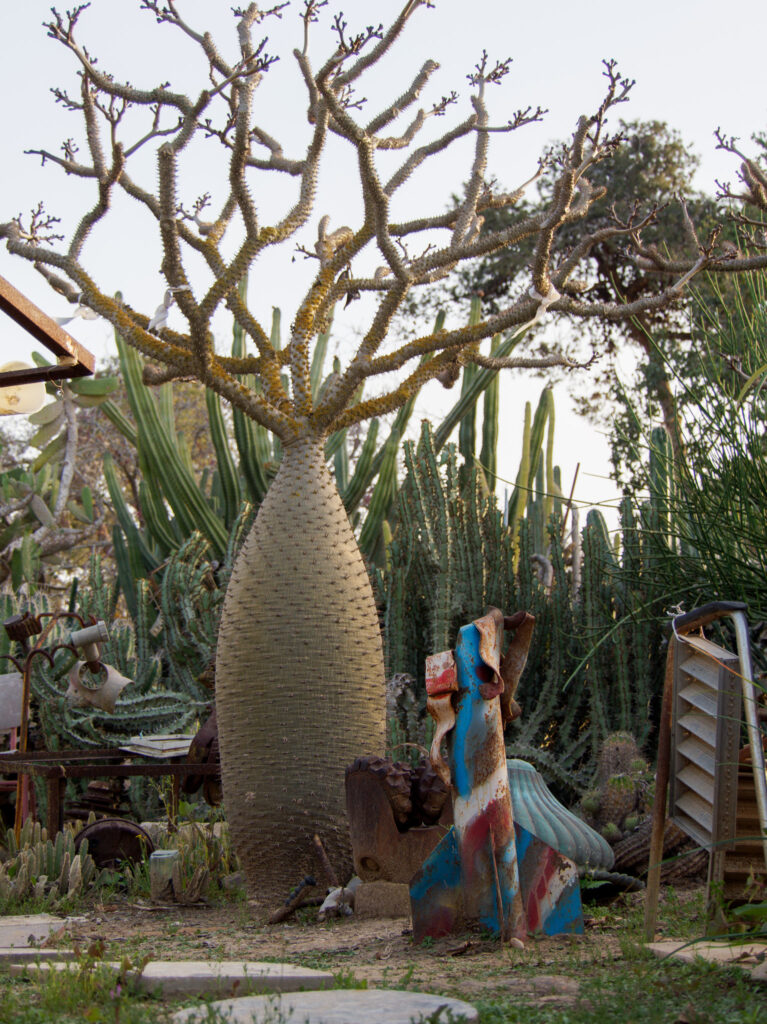
When Rita Lifshitz walks through her kibbutz, the cats rise from the shade and meow in chorus, for Rita took them in when their people were abducted or murdered, or had to leave behind their burned homes. Rita—whose parents-in-law, Oded (84) and Yosheved (85), were abducted on October 7—described the charred houses as a wound still bleeding. Now that they are being torn down, it feels like a hole in the heart. That sentence describes Nir Oz more precisely than any political formula. For emptiness here is not absence; it is a form of presence. Yosheved returned as one of the first surviving hostages. “Grandpa Oded,” as Rita affectionately calls him—a well-known peace activist—followed only a year and a half later, in a burial shroud. In his cactus garden, there is still a rocket from Gaza, which Oded once “planted” among the cacti with Israeli humor.
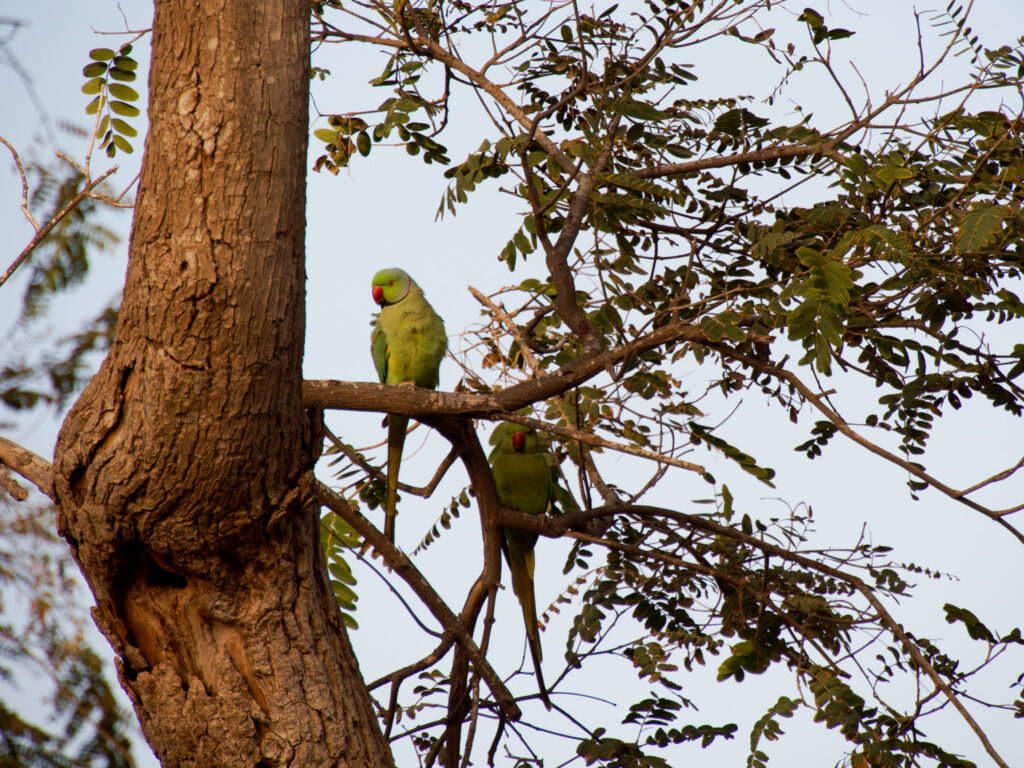
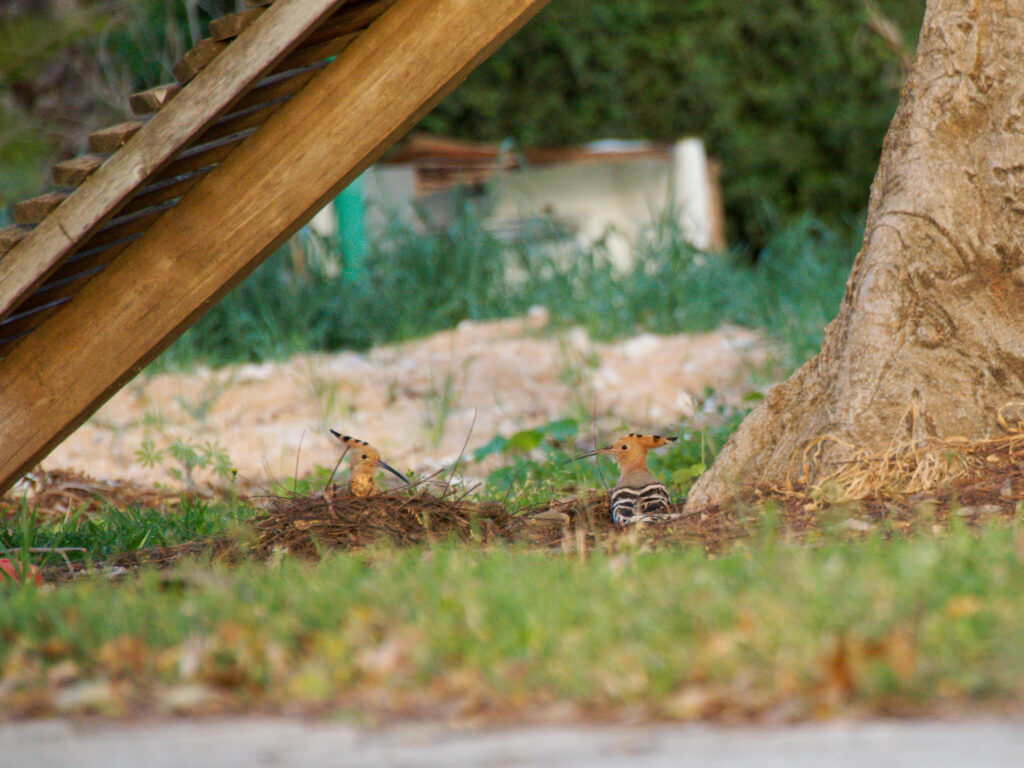
And yet Nir Oz cannot be reduced to death and ruins. Four months earlier, I had already visited the kibbutz and was numbed by the pain and the contradiction with the beauty in which it is set. Part of its present consists of work: clearing up, pruning, repairing, planting anew. During my stay as a volunteer, this meant above all gardening—an activity that is anything but incidental in Nir Oz. It touches the very core of the place. For this greenery is not accidental. It has been made—against the dryness, against the conditions, with expertise and with love. Perhaps that is precisely why it feels so unreal, in a place that has become a scene of horror, not only to mow with the cheremesh, the brush cutter, in order to preserve it, but also to photograph birds, to admire the exuberant beauty, to tell each other jokes, to feel joy. The question of whether one is allowed to do so arises almost by itself.
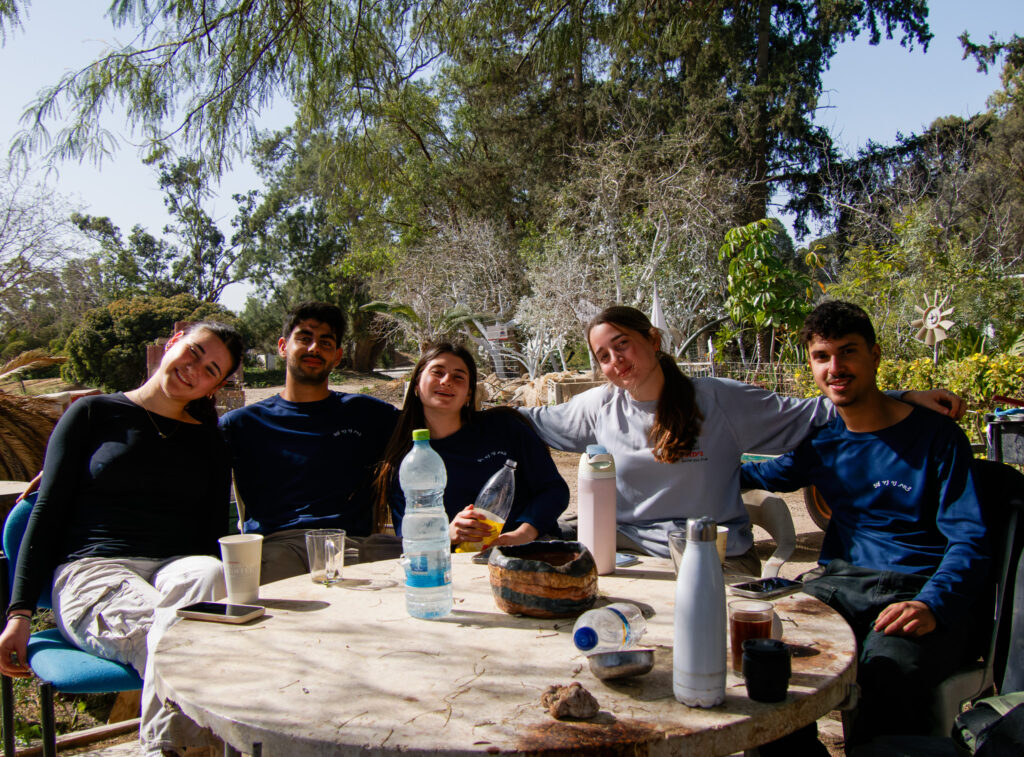
Young people, too, come to take part in shaping this present. Israeli volunteers regularly help as part of a social service year before military service. This year is called Shnat Sherut, a year of service, and its participants are known as Shinshinim. That these young people come to Nir Oz perhaps says more about the state of the place than any official speech: it is wounded, but not abandoned.
Only a small part of the former community lives there again. Before October 7, Nir Oz had around 400 residents; so far, only about a quarter have returned permanently. At the same time, the will to rebuild is as concrete as the destruction itself: new houses, new residential areas, new programs for children and young people. The kibbutz has chosen to return; official reconstruction plans explicitly speak of renewal, of new life, and of a future that does not merely aim to restore what was. The kibbutzim are even planning for Nir Oz to grow larger than before. There is talk of 500 people. Among them are dozens of young Israelis who settled there after October 7, pitching in and helping to rebuild. One of them is Ariane, who first visited the kibbutz in 2024 shortly after she decided to make aliyah—to immigrate— from her home in Canada to Israel. And also Tim from Germany, a trained auto mechanic, who is working for the third time as a volunteer in the workshop for several months.
The pathos of this determination lies not in grand words, but in the sobriety with which people work there. Nir Oz is not meant to become a museum, not merely a site of memory. It is meant to be a place where people live—and it has remained one. A place with paths, with gardens, with a tennis court, with music, with children. A place in which the dead are not forgotten and the living are not given up. Among them are the brothers Yoav and Yuval, who, as native kibbutz members, experienced October 7 firsthand and now lead the gardening team together with Ariane. “Maybe even 800,” Yoav replies when I mention the figure of 500 people who are supposed to live in Nir Oz one day. “Look, we still have so much space! Over there, where the old chicken coop stands, there will definitely be new houses,” he says, pointing—not without pride and anticipation.
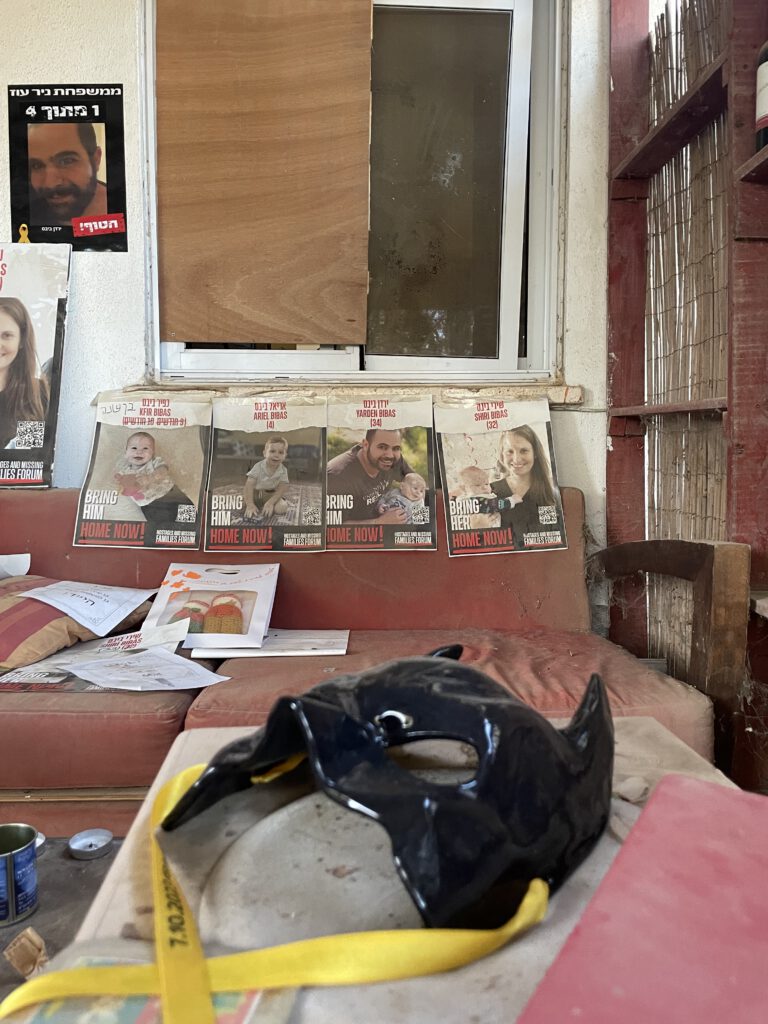
Perhaps this also contains the answer to the question of whether one may perceive beauty in a place like this. One may—because this beauty does not stand against the dead, but for what they helped to build. For the co-founder, Grandpa Oded. For Shiri Bibas, 32 years old, and her two children: Ariel, four, and Kfir, nine months. And for the many others whose loss in Nir Oz does not remain abstract. To see the beauty of this place is not to forget the crime. It is to take seriously what was meant to be destroyed there—and what nevertheless endures: Nir Oz. In English, “Field of Strength.”
By Arne Albracht, on his visits to Nir Oz in October 2025 and February 2026.